Mixing Benadryl and alcohol can be very dangerous. Benadryl is a medicine people use for allergies or to help sleep. Alcohol is a drink that can make you sleepy and slow down your body. When you take Benadryl and drink alcohol at the same time, both make your body and brain slow. You can feel very tired, dizzy, or confused. Some people may fall, get sick, or have trouble breathing. The risks are higher if you take a lot of medicine or drink a lot. Even small amounts can be unsafe. Always read medicine labels and ask a doctor before drinking alcohol. Staying safe is very important.
Table of Contents

Get Your Life Back
Find Hope & Recovery. Get Safe Comfortable Detox, Addiction Rehab & Mental Health Dual Diagnosis High-Quality Care at the We Level Up Treatment Centers Network.
Hotline (877) 378-4154Benadryl and Alcohol: What You Need to Know
Benadryl is a medicine that helps with allergies, itching, and sometimes sleep problems. Alcohol is a drink that can make you feel relaxed or sleepy. When people take Benadryl and drink alcohol at the same time, it can slow down the brain and body too much. This can make you very sleepy, dizzy, or confused. Even a small amount of alcohol can make the effects stronger. Mixing them is risky for everyone, but it is especially dangerous for older adults or people with health problems.
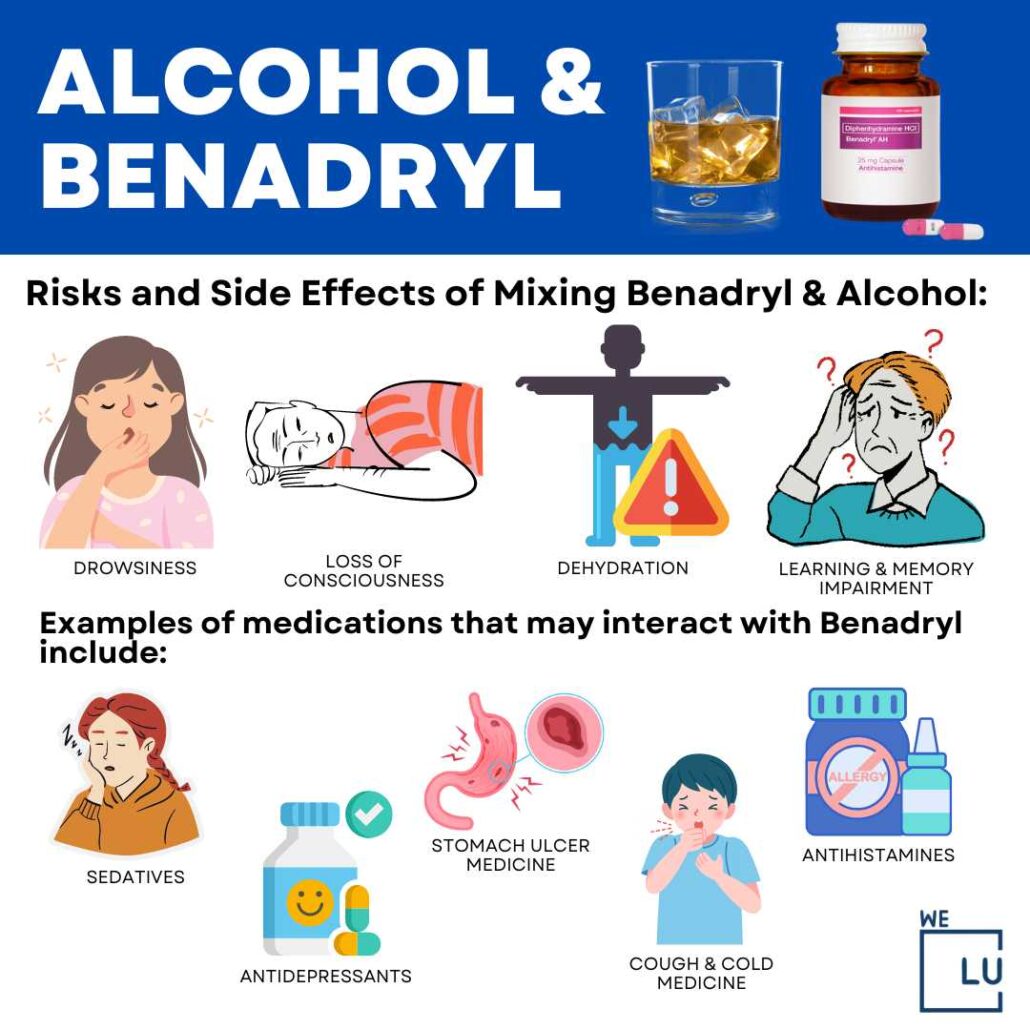
The main risk of combining Benadryl and Alcohol is that both make your body and brain slow. You may have trouble walking or keeping your balance. You might fall or hurt yourself. Your thinking can be slower, and your memory may not work well. Some people have trouble breathing or feel sick. These problems happen because both substances affect your brain in similar ways. Doctors and health experts say it is unsafe to mix them.
To stay safe, always read medicine labels and follow instructions. If you take Benadryl, avoid drinking alcohol until the medicine is out of your system. Ask a doctor or pharmacist if you are unsure. If you accidentally mix them and feel very sleepy, dizzy, or have trouble breathing, get help right away. Understanding the risks of Benadryl and alcohol can keep you safe and prevent accidents.
How Benadryl and Alcohol Interact?
When you take Benadryl, it blocks histamine in the body. Histamine causes allergy symptoms. Blocking histamine helps you feel better. Alcohol does not block histamine, but it does slow down nerves and the brain. These two together make the body slower. This is why doctors call this a Benadryl and alcohol interaction. The brain slows down more than with just one substance alone. This is why many people feel very tired or foggy.
It can also make coordination worse. Coordination is how well you move and balance. When coordination is poor, you may fall or drop things. This is dangerous, especially if you drive or use sharp tools. The interaction also affects the heart and breathing. The heart may beat slower or faster than normal. Breathing can become shallow. This is more likely if a person takes a high amount of alcohol or Benadryl.
Get Help. Get Better. Get Your Life Back.
Searching for Accredited Drug & Alcohol Rehab Centers Near You? Or Mental Health Support?
Even if you have failed previously, relapsed, or are in a difficult crisis, we stand ready to support you. Our trusted behavioral health specialists will not give up on you. Call us when you feel ready or want someone to speak to about therapy alternatives to change your life. Even if we cannot assist you, we will lead you wherever you can get support. There is no obligation. Call our hotline today.
FREE Addiction Hotline – Call 24/7Diphenhydramine Alcohol Risks
There are many diphenhydramine alcohol risks to know about:
- Too much sleepiness. You sleep more deeply or feel very tired.
- Slow breathing. You may not breathe enough air.
- Poor thinking. You may have trouble focusing or talking.
- Balance issues. You can fall or hurt yourself.
- Memory problems. You may forget what happened.
- Dizziness. You may feel lightheaded or weak.
Some people think Benadryl is safe because it is over‑the‑counter. But mixing it with alcohol can be harmful. Even a moderate drink can make the side effects worse.
If a person takes other medicines too, the risks go up. Some cough syrups, cold medicines, or sleep pills also cause sedation. Combining them with alcohol and Benadryl is a bad idea.
Antihistamine Alcohol Effects
Benadryl belongs to a group of medicines called antihistamines. Antihistamines by themselves make some people drowsy. Alcohol also makes people sleepy. When a person takes both, the sleepiness increases.
This can affect driving, working, and daily tasks. Many car accidents happen because a person is tired or unfocused. Antihistamine alcohol effects also include blurred vision. This means you may not see clearly.
People may also get confused. Confusion makes it hard to think quickly. This is dangerous in complicated or risky situations. It can also make falls and injuries more likely. Because of this, health professionals advise against using alcohol with medicines that cause sedation.
Signs You Might Be Too Affected
Here are signs you might be having trouble from mixing Benadryl with alcohol:
- Feeling extremely tired or having a hard to stay awake.
- Feeling dizzy or lightheaded.
- Trouble walking or keeping balance.
- Feeling very confused or slow to answer.
- Blurred vision or double vision.
- Hard time breathing deeply.
- Feeling sick to your stomach.
If you or someone you know has these signs, you may need help right away. Call a health professional if breathing becomes slow or if you cannot wake up easily.
Why People Still Mix Benadryl and Alcohol?
Some people mix these substances by accident. They may take Benadryl to sleep and not think about their drink. Others may take Benadryl for allergies at a party.
Some believe that a small amount is okay. But many health experts warn that even small doses can be risky. The combination changes how the body reacts. This can be worse for older adults or people with heart or breathing problems.
How to Stay Safe?
Here are ways to avoid danger:
- Read all medicine instructions before taking them.
- Ask a doctor or pharmacist if you are unsure.
- Avoid drinking alcohol when taking Benadryl.
- Use safer alternatives for sleep than Benadryl if you plan to drink.
- Watch for signs of trouble like dizziness or trouble breathing.
If you ever think the mix is hurting you, stop taking it and get help. Safety must always come first.
Experience Transformative Recovery at the We Level Up Treatment Center.
See our authentic success stories. Get inspired. Get the help you deserve.
Start a New Life
Begin with a free call to an addiction & behavioral health treatment advisor. Learn more about our dual-diagnosis programs. The We Level Up treatment center network delivers various recovery programs at each treatment facility. Call to learn more.
- Personalized Care
- Caring Accountable Staff
- Comfortable Amenities
- Licensed & Accredited
- Renowned w/ 5-Star Reviews
We’ll Call You
Ready to Get Started?
If you are worried about alcohol use and medicine safety, it might help to talk with a professional. At We Level Up NJ, we care about your health and safety. We help people understand risks like Benadryl and alcohol interactions and how to stay safer. Call us now to learn more about support and care.
Address: 276 Bakers Basin Rd, Lawrenceville, NJ 08648 Phone: (201) 389‑9370
FAQs About Benadryl and Alcohol
1. Can I drink alcohol if I take Benadryl?
You should not drink alcohol if you take Benadryl. Drinking alcohol with Benadryl increases the chance of feeling very sleepy and having trouble thinking.
2. Why is the Benadryl and alcohol interaction dangerous?
The interaction can make your brain and body slow down too much. This can lead to falls, breathing trouble, and problems concentrating.
3. How long should I wait after taking Benadryl to drink alcohol?
It is best to avoid alcohol for at least 24 hours after taking Benadryl. The effects can last for many hours.
4. What are diphenhydramine and alcohol risks?
Risks include too much sleepiness, slowed breathing, confusion, and dizziness. These effects can be dangerous, especially if you drive.
5. Are antihistamine alcohol effects the same for everyone?
No. Some people may feel the effects more than others. Older adults and people with health problems may have stronger effects.
6. What should I do if I mixed Benadryl with alcohol by accident?
Stop taking both and get help if you feel very sleepy, dizzy, or have trouble breathing. Call a health care provider right away.